

“The Roma Pass. You must get the Roma Pass.” My Turkish friend instructed when she heard I was going to Rome for a few days.
It was good advice. The pass includes free transport on the public bus and metro and entrance to two attractions on the list, which included most of the major attractions and museums except for the Vatican. Aside from reducing the cost of buying tickets at the entrance, there is a bonus of getting to skip the lines. No matter what time of the year, there will be lines! We bought ours at the airport when we arrived; they are available throughout the city.
We took Easy Jet from Milano as the price was significantly lower than taking the train. It was only a short flight and we rode the Leonardo Express Train from Fiumicino Airport into the city. We found a nice guest room on booking.com located a block from Isola Tiberina. After checking in, we hit the streets with our trusted map and decided to hoof it over to the Forum, taking in the attractions along the way rather than finding a bus or metro going that way.
It wasn’t my first trip to Roma. That was in the late 80s and while I’d been blown away by the abundance of antiquity, I’d found the city to be dirty, unfriendly and a bit dangerous to be a pedestrian. Things had changed. It was notably cleaner with well marked signage. The roads had become one way systems that created a better flow of traffic and I found shopkeepers and restaurant staff very pleasant and personable. To this date, Roma is the only place I ever had anything stolen. Somebody nabbed my jean jacket right off my bag when I was standing in the train station during my first trip. It was hard to believe it was the same city this time.

We were tired as we had left home early that morning but the sights were so stimulating we seemed to have enough moxy. We headed over the Ponte Fabricius chuckling at how it felt to be traversing the Tiber on something that was built in 62 B.C. and after meandering around for awhile, stumbled onto The Circus Maximus/Il Circo Massimo, or rather what was left of it. The slopes that once housed over 150,000 spectators were now barren except for a parade of dog walkers and a few groups of tourists who had made themselves comfortable on the grass and were looking at the now empty basin as if they could see the spectacular Roman chariot races and other events that took place to honour the god Consualia.
Moving on we spied countless bits of antiquity poking out from under trees and behind walls. Our tourist maps indicated the names and history of some but others things were unnamed artefacts and I liked having some of that in the mix.


Eventually, we made our way to The Roman Forum/Il Foro Romano and opted out of the queue by using our Roma Pass. The layers of history was simply jaw-dropping. We were here for around three hours but could have really done with more time. During ancient Roman times this was the economic and civic centre of the city.


It was hunger that tore us away from the Forum. We set out for a nice cafe that was serving early dinner–something we’d given up trying to find up in Lomardia. But Rome caters to the tourist masses and we found a lovely corner restaurant, off the beat and track, hidden down an alley way and open at 6pm. We walked back to the guest house and fell into bed. We’d walked eleven kilometres in total and our feet were screaming at us as we dozed off.
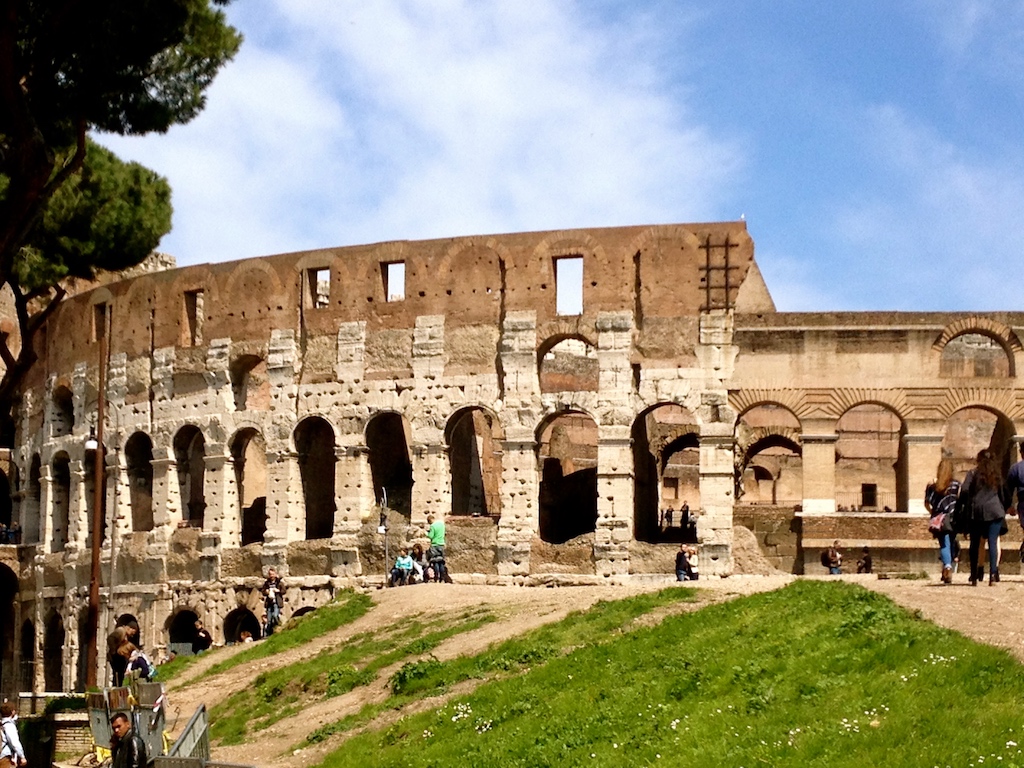
The next morning we headed to The Coliseum/Il Colosseo. Once again, we decided to walk. Using the passes meant we only had a twenty minute wait. The regular line was deadly, even at 10am. I’d been here before and the second I stepped inside, I remembered the smell. Musky. It adds to the whole sensation of standing in a part of history that is not something any ethical human being could condone. But when in Rome, I put that out of mind and got swept up appreciating the marvel of how this structure has stood the test of time. There are even two thousand year old fountains that still produce drinkable water.
The Coliseum


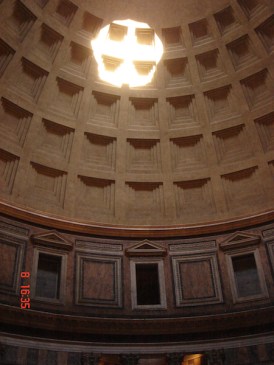
After pushing our way through the crowds and seeing the Coliseum from every angle, we visited The Pantheon to check out its open oculus, 8.93 meters in diameter. It is mind-boggling how the building is so well preserved. As we didn’t have to queue and pay to enter, we only spent a few minutes walking around and watching the play of light from the oculus on the elaborate ceiling.
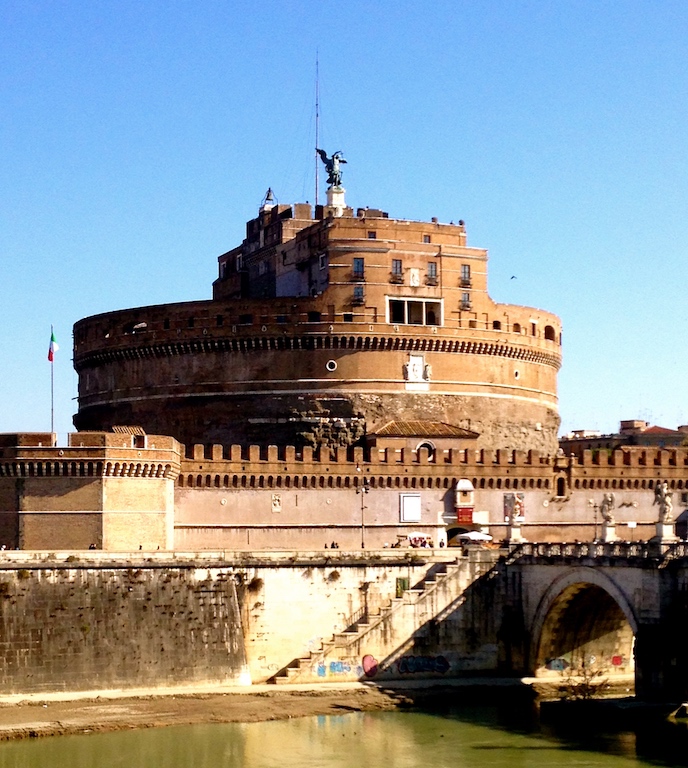
Next we headed over the Ponte Sant’Angelo to see Hadrian’s Mausoleum Castle Sant’Angelo.
Built to house the remains of the Emperor Hadrian, the structure was constructed between 130 and 139 AD. We’d used up our line-jumping Roma Passes so we had to wait about 30 minutes for entry. The views alone were worth it!


Growling tummies sent us in search of food. Wanting to avoid the tourist traps, we found an old bar filled with locals and grabbed some panini and drinks. The place looked like it was in dire need of a paint job and was traditional in the sense that you paid first and then took your ticket to the counter to be served. The owner, a tall striking gentleman, was very friendly and patient with my Italian addressing me slowly instead of breaking into English as so many people in Rome do.
After lunch we headed to Spanish Steps which was so crowed with people that I couldn’t even see any cement. I relished the memory of having sat there on a quiet Tuesday afternoon during my first visit, which was in January. We took some gelato breaks and visited quite a few churches before heading back to our guest house, grabbing dinner on the way home. Once again, we’d stayed on foot the whole day opting not to miss out on little street scenes rather than use our Roma Passes for transport. Our estimate, 14 kilometres.
For our final day, we planned to get to the Vatican as quickly as possible as the queues are notoriously long. But comfortable beds were hard to leave, especially with sore feet. It was around 10:30 when we made it over there and the queues were frightening. After waving off the industrial sales reps trying to herd us towards one of their tour operators, we decided to check it out. Sure enough, for 30 euro we were able to take a guided tour that involved a set time for entry. This was perfect for us as the crowds were horrendous inside and it would have been easy to miss a lot of the art and interesting details on the way to the Sistine Chapel if our guide hadn’t pointed them out. We were given headsets in order to hear her and my son, who was 11, stayed at her side the whole time. Because she was holding up an umbrella, I knew where he was. It would be very easy to lose a child in those crowds.


 Whimspherical